Basic Builds for Intro to Stagecraft Students: Practical Projects for New Learners
By Jodi Williams
It’s that time of year! We have shops full of new stagecraft students, many of them newly minted freshmen. They are ready to build the Taj Mahal but have never read a tape measure and couldn’t identify a tiger saw if it bit them.
I am a big fan of experiential learning for theater education and stagecraft classes. I think the best way to learn something is to just jump in and do it: make the mistakes, figure out the corrections, and try again. I could do this while building full sets in my classes years ago when the class period was 90 minutes and the student count topped at 16. Now I have 55-minute classes and 30 students per section, but that doesn’t mean we give up on project-based learning in our theater tech classes or stagecraft training. I have modified and developed projects that train my students while they are on the move. This keeps them interested, and when the projects go well, they provide us with useful theater shop items that we can use all season long.
Project-Based Learning in Action for Stagecraft
For beginner stagecraft projects, I break students up into groups of four. When you get as large as five in a group, someone is always watching rather than participating. Be specific about the roles students will fill. Who will read the plans? Who will gather the materials, collect the tools, and take the notes. Be clear that jobs will rotate.
Whatever the project is, the first step is always reading the instructions. I attach a questionnaire to the sheet that they must complete before they can touch the tools or materials. The questions require them to do a little shop planning, not just repeat what’s in the instructions. For example, have them plan how many cuts they could get out of a 6’ piece of ¾ ply, or 12’ piece of 1x4. That’s not exactly working with scrap, but it puts them in the frame of mind to not only pay attention to what’s on the page, but also apply what they are reading to what they will use in the shop. I will also remove the cut list portion of the instructions, leaving them with only the final dimensions of the project. Their first task is to develop the cut list. This shows me they understand planning, lumber widths, and assembly in advance of any cuts being made. Then I have them check in with me before they start.
Rehearsal Cubes: A Beginner-Friendly Stagecraft Project
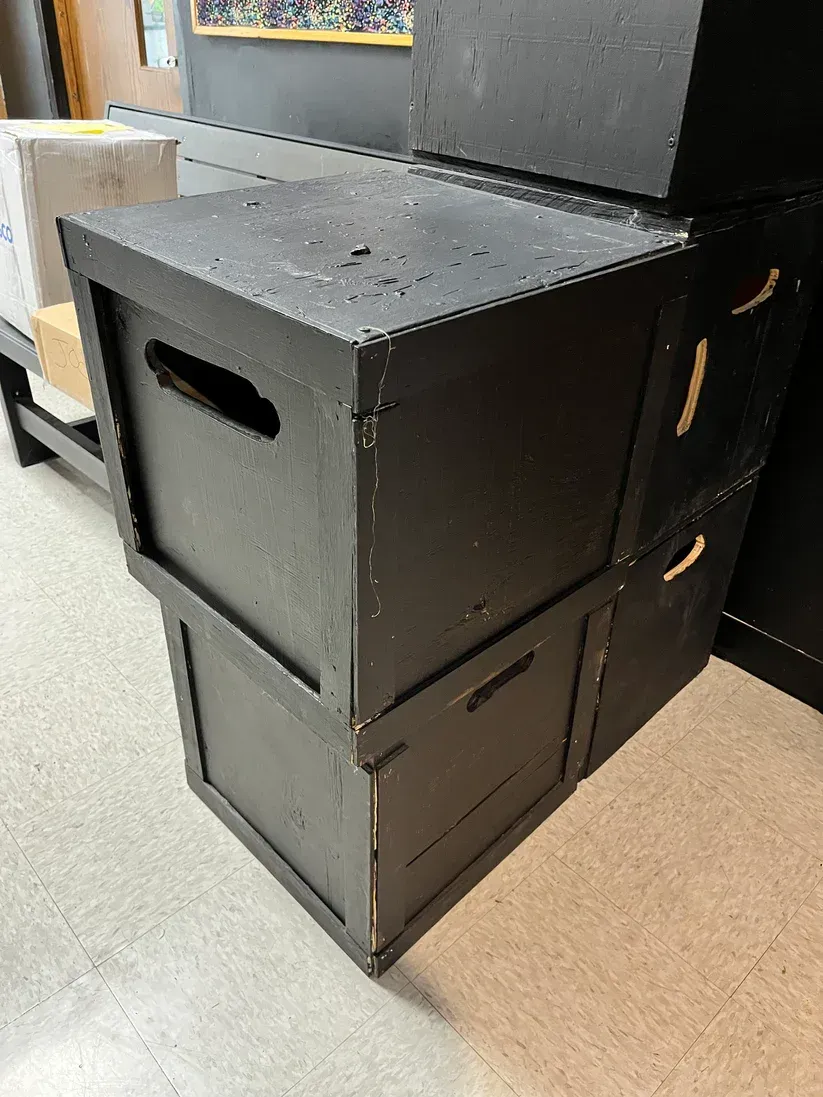
The first build project we do (after safety training) is building rehearsal cubes. Rehearsal cubes with hinged lids are useful for acting classes, stand-ins for furniture and set pieces during rehearsals, and great for storage in the shop and classroom. They use all of our basic power tools, can be built in a range of sizes, and use up the small squares of scrap we always end up with but hate to throw away.
Mini Flats: Teaching Proper Construction on a Smaller Scale
Another good stagecraft project that uses a lot of small scrap is mini flats: 2’x4’ standard or Hollywood flats that show students the proper construction on a smaller scale. You can hard or soft cover them and then move on to a scenic painting unit! You can keep this project relevant by then taking those painted flats out on stage and seeing how they react to stage light. Now you have a color theory and practical application lesson.
Mini Platforms: Versatile and Practical
Mini platforms achieve the same goal. When we finish them, we put casters on them and use them as dollies in the shop and in our storage areas.
What do Practical Projects Give Your Students?
All of these theater shop projects allow students to use the most basic shop tools on less consequential builds while still learning:
Layout techniques for stagecraft
How to follow instructions in theater builds
Teamwork in stagecraft
As an added benefit, you keep the best projects as practical units for your scene shop and space. Since you’re using scrap, you don’t feel guilty about the mistakes your students will inevitably make.
I have watched these starter projects spur students confidence and change attitudes in a very short time. Last year, I had one students start the project by flat out refusing to work with anyone else in the class. There was a lot going on with this young man. Smart, withdrawn, and not interested in socializing, he was sure he could do it by himself. So I let him try. What he discovered is that theater really is a team sport and you do need a few extra hands every now and then to make the cuts, support the pieces, and secure the joints. I think he made a few friends, too.
These are often the first hands on "builds" many of our students ever do. Its important to celebrate even the bad projects when its someone's first try. Point out the mistakes, ask them how they could solve for those problems, take it apart and try it again. With joy and enthusiasm. They will start to understand that the mistakes are the journey.
If you’re looking for instructions on building rehearsal cubes, flats, platforms, or even larger scenic units, visit Backstage AIC’s webpage. There are a variety of instruction packages for theater builds, broken down step by step with diagrams so even new scene shop students can follow along with confidence.
Your Turn
What are your go-to beginner build projects for stagecraft? How do you balance skill-building with practical results in your theater education program? Share your ideas in the comments or over on the Backstage AIC Facebook page. Let’s learn from each other and build a stronger theater tech community!