Building Lightweight Sets for Easy Setup and Removal
Building Lightweight Sets for Easy Setup and Removal
In technical theater, sometimes less really is more. A set doesn’t have to weigh a ton to make a big impact. In fact, building lightweight, modular pieces can save time, reduce stress, and make life easier for everyone. Whether you’re in a high school, community theater, or a borrowed performance space, learning how to design with flexibility and efficiency in mind is a game changer.
Why Lightweight Matters
For over two decades, I have designed and built for shows in the high school space that are intended to travel. Every stage has at least one, and in some places multiple, one act theater festivals. There are also several national festivals held annually for high schools, and even international performance festivals that invite high school groups to be a part of.
Sometimes, these festivals allow only a few props. For others, we load a semi or two with our entire production and hit the road in a coach. It takes tremendous planning to design and build a set to break down and fit through an 7’6” x 7’6” hallway door. A lot of what I have learned though this, though, can be applied to build throughout the season, and it has given us a more flexible inventory we use over and over.
Here are some things to consider. If your show requires quick scene changes, lighter pieces make transitions smoother and safer. If your crews are like mine, filled with eager, but not necessarily heavy weight, high schoolers, weight matters. Schools and community theaters rarely have endless storage. Lighter, modular pieces can be stacked, nested, or stored vertically with ease. Even very tall pieces can be managed when they don’t weigh a ton. Many high school crews are still developing strength and confidence. Lighter sets empower students to take ownership without risking injury. For touring productions or performances in multipurpose spaces, lightweight sets make transport and reassembly practical.
Materials to Consider
When building to move, think thin and strong. Lauan is a standard for covering walls and is much lighter than standard ¼” plywood for facing flats or platforms. Soft cover flats are also an option, and can cut weight WAY down. Soft cover flats require more care to avoid tearing or denting, but are great when you are flying, as they weigh so much less than hard covered flats.
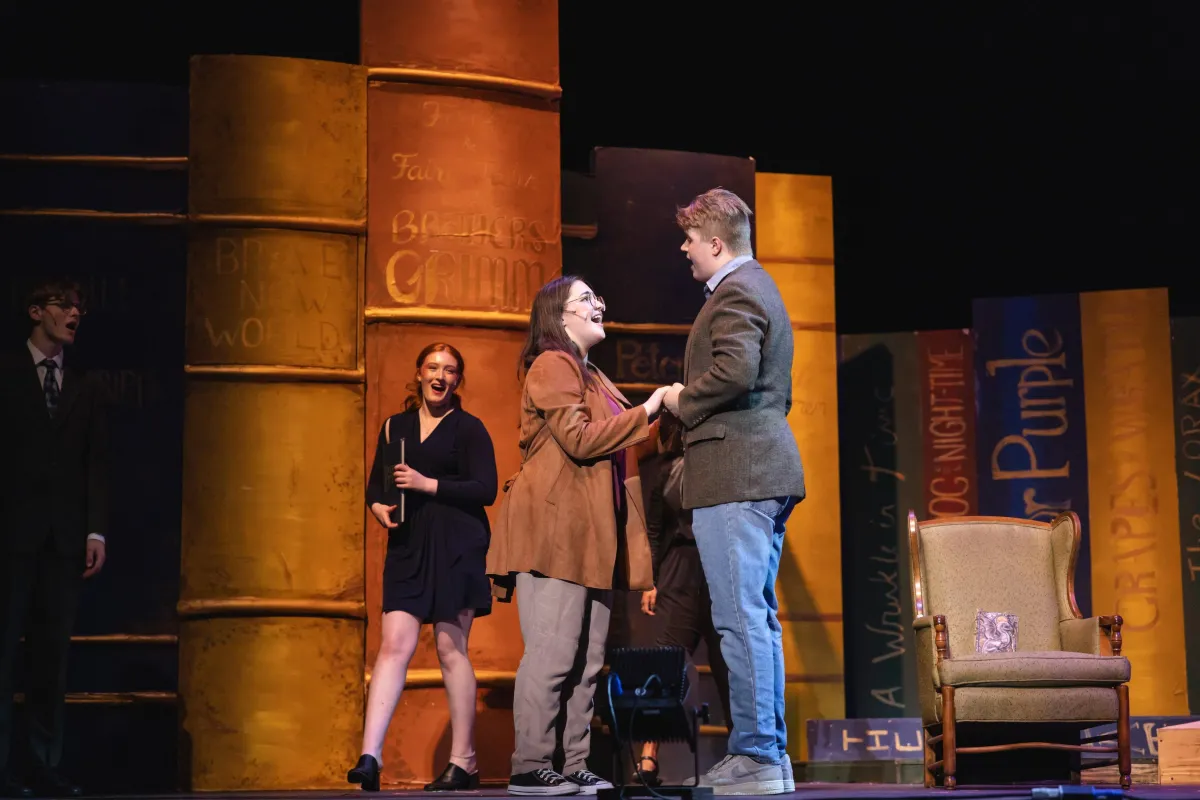
I love foam. Great for texture, sculpting, and creating depth without weight, I first started using foam for scenery when working for a children’s theater that created giant oversized sets for the show 10 Minutes to Bed Time. We would never have been able to manage the giant molding for the walls if we hadn’t created them from foam. Be careful about what you use, how you cut and carve it, and what regulations are in your area. Foam releases toxic gasses when cut or melted, so know what you’re dealing with.
PVC Pipe or aluminum framing can be alternatives to heavy wood for certain elements. I love PVC for props (we’re building lamp posts right now) and if you have access to the tools to use aluminum, that can create some wild shapes that are hard with lumber. It is pricey though, and requires some specialized knowledge to work with to get the best benefit. Talk to your local fabrication shops to see what kind of partnership you can build.
And of course, put it on casters. Make sure you know what type of casters don’t leave marks on stage floors, how much weight they will carry, and how to keep them free from debris. My absolute favorite are Triple Swivel casters from StageMaster. They can be purchased from Rosebrand. They are expensive, but have a great weight rating and turn on a dime.
Construction Tips
Stick with 4’ or narrower flats and platforms that can be combined in multiple configurations. Don’t use 2x4 for bracing all the time. If your scenery is not holding actors, you can most often brace with 1x4 or 1x3. Strategic bracing provides stability without adding unnecessary bulk, so look at where you are supporting. Just adding heavy materials isn’t the answer.
Break down large elements into smaller, interlocking pieces for easier storage and transport. This will raise the cost of your build a bit, but will pay off in the long run. You will struggle less and have a great inventory to pull from.
A bold paint treatment can add dimension and drama without additional lumber. Flex those scenic art muscles and get visual without getting heavy. Find a local scenic artist to come in and teach a workshop if you don’t feel your skills are up to snuff.
Real-World Example
When our program toured Really Rosie to elementary schools, we had to design for speed and flexibility. The set had to fit through doorways, load onto a pick up, and still look engaging for students. By using foam walls and easy to carry, standard sized units, we built a set that was durable, easy to transport, and simple to strike after each performance. The payoff? More time spent performing, less time wrestling scenery.
This year, we're building a multi use set for the fall, with tall buildings and a wide ground row, that will all have to exit through our hallway doors, around a 90 degree turn, and out to the less than 8' square dock. Remember length matters as well.
Safety First
Even lightweight sets need to be safe and stable. Always check for wobbling, secure units with braces or weights when necessary, and train your students on proper lifting and handling techniques. The audience will be watching your set wiggle instead of watching the show if the movement looks unsafe.
Final Thoughts
Lightweight doesn’t mean “cheap” or “flimsy.” With smart design, durable materials, and a little creativity, you can build sets that are strong, versatile, and easy to manage. The goal is simple: less stress backstage, more magic onstage.
Do you have a favorite lightweight set-building trick or a clever material hack? Share it in the comments or tag us on social media with your solutions. We love to spotlight your creativity! Share it on the Backstage AIC Facebook Group!