Hand Tools: The Unsung Heroes of Your Theater Toolkit
Hand Tools: The Unsung Heroes of Your Theater Toolkit
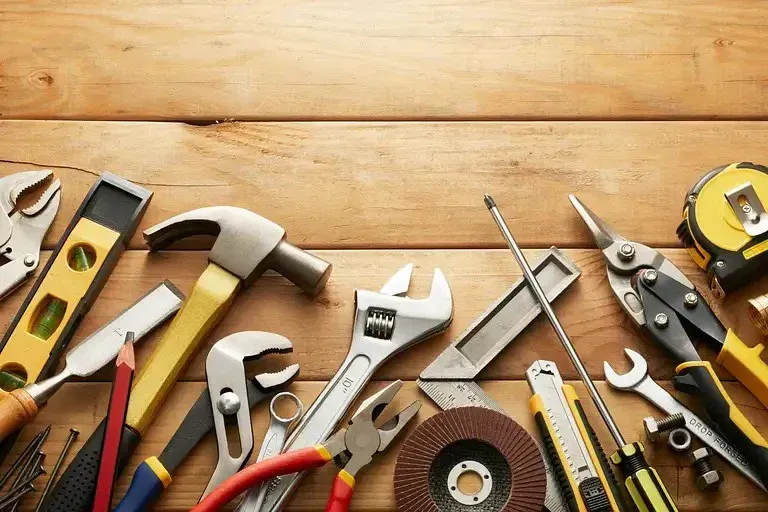
For the most part, hand tools are your basic home toolbox tools. No theater is without them, and they’re often the first things your students will reach for. You don’t need every tool under the sun, just the right ones, used well. Here’s a breakdown of the hand tools I’ve relied on for 25 years, why they matter, and how to keep them in good shape.
What is Your ME’s Best Friend?
Commonly called C-wrenches (Crescent is a trademark name, but it’s become the common term), these are a must for lighting and platform legging. They’re simple to use, fit a number of bolt and nut sizes, can handle both metric and standard bolts, and fit neatly in your back pocket.
Keep a good stock of 6” wrenches, a few 8” for larger nuts, and maybe one 10” for those really big bolts. They cost about $2.50 each, cheap insurance for smooth load ins. Also, consider tethering your wrenches to a belt loop or tool belt, even if you’re not working at height. You will never accidentally leave a wrench on top of your electric run if it is attached to your pants.
More Than Just Phillips and Flathead
You’ll need Phillips (cross) and flathead (slotted) screwdrivers for most jobs, but don’t stop there. Keep a set of torx bits (star-shaped) and a few Robertson’s (square) on hand for odd items that might appear in your shop. A lot of sound equipment cases and road boxes are put together with torx screws, and you never know when a random piece of furniture will require a square bit.
Consider: A few years ago, on the suggestion of a friend, I switched our shop to primarily Robertson screws for our builds. They grip better and are harder for new stagecraft students to strip.
Didn’t You Get Those at IKEA?
Allen wrenches, or hex keys, are everywhere. We see these a lot in ready-to-assemble furniture, and they’re just as useful in the theater. Keep a set handy, from tiny up to ½”, because you never know when something you bought at Walmart (or borrowed from the custodian) will need tightening.
Bonus: Pick up a multi-set that looks like a Swiss Army knife. You can get them in both metric and English standard dimensions and won’t get lost as easily as the loose sets. The case also makes a nice hefty handle for leverage.
Because “Eyeballing It” Doesn’t Cut It
For most scenery, you won’t need more than a 16’ tape measure, but keep a 25’ handy for larger projects. A 100’ cloth tape measure is also great for marking out your stage, measuring trim height on the fly lines, or sizing large soft goods (curtains, drops, or any scenery made completely of cloth).
Student Tip: Teach your crew to pull the tape straight, no sagging and read the markings accurately. “Close enough” isn’t a thing in theater, unless you want a wobbly set.
Get a Grip
Get a good set of multi-sized pliers, but don’t let students use them as wire cutters or wrenches. Buy wire cutters and wrenches for those jobs. Using pliers for the wrong task ruins the tool and the project.
Rule of Thumb: If it feels wrong, it probably is. Pliers are for gripping and bending, not cutting or cranking.
Mallets and Hammers, Not the Same Thing
Mallets are not hammers. Hammers are not mallets. For assembly and disassembly, you’ll want a few good, sturdy mallets.Mallets distribute force evenly, so you don’t dent your scenery or your students’ fingers. I prefer full molded mallets or deadblows. I’ve had too many overzealous students break wooden handles during strikes and tear-downs.
I don’t use hammers much in my shop, all our scenery is put together with screws or staples, but I keep a few in the toolbox, just to be prepared. You never know when you’ll need to tap something into place or pry something apart.
Respect the Blade
I grew up with a seamstress mom and a healthy respect for Ginger shears. You didn’t use Mom’s good shears to cut construction paper. The same rule applies in the shop. Wire rope cutters should not be used as tin snips. Nippers (for pulling staples) should not be used as bolt cutters. Bolt cutters should not be used to cut S/O cable.
Why? The blades, assembly, and shape of these tools are designed for specific materials. Using them incorrectly makes the job harder and ruins the tool.
Teach This: “The right tool for the job is the right tool for the job, not the tool you have on hand.”
The Dynamic Duo
Channel locks and vice grips. I suggest keeping two of each in your shop. Channel locks are great for gripping odd-shaped objects, and vice grips can lock onto just about anything, just don’t let students use them as a substitute for wrenches or pliers.
Ever Need a Third Hand
Get an assortment of clamps in a variety of sizes. Quick clamps (the hand-squeeze variety) are incredibly useful, but spend the extra few bucks to get a quality brand—the cheap ones will fail. Carpentry C-clamps require two hands to set (unless you are super talented) but won’t let you down if used properly.
Use clamps to secure wood before cutting or gluing. It’s safer than using your body and your fingers will thank you.
For the Odd Jobs
Keep a keyhole saw, coping saw, and hacksaw on hand. You won’t use them every day, but when you need to cut a small, precise shape or trim a metal rod, they’re invaluable.
Final Thought: You Don’t Need Everything
If you’re a small operation looking at this list thinking, “I can’t possibly afford all of that!”, relax. I worked for a theater that had all its tools in two milk crates. They had a jig saw, a circular saw, two drills, and a set of home tools. They operated for over 20 years that way and were perfectly happy.
Start small. Look for secondhand tools at Goodwill, Craigslist, or ReStore. Check them thoroughly, or take them to a professional for inspection. Donations are another great way to build your toolkit without breaking the bank.
Question for You:
What’s the one hand tool you couldn’t live without in your theater shop? Come to our Backstage AIC Facebook group and share in the comments!