How We Use Real Productions as Final Exams
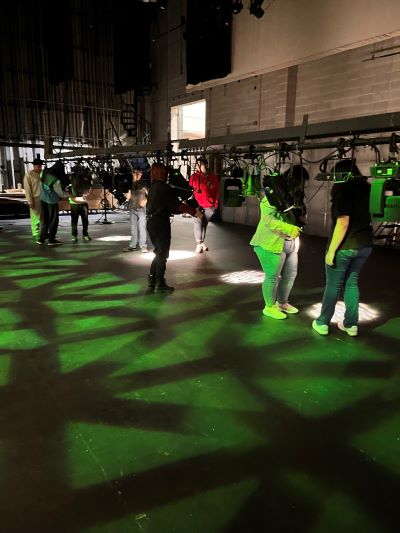
It’s the end of the school year! Today and tomorrow, we’re prepping our stage for our final music concert, and our Stagecraft students are right in the middle of it. The end of May also means we're moving into dance season.
What is Dance Season, anyway?
If you know, you know. Dance Season is a very busy time for many schools. If you have a large stage and an active arts community chances are, you’re hosting large dance recitals. In our space alone, we have one dance school that produces four dance shows in June (shout out to KAPA).
But this isn’t just prep work, it’s education in action. We use these end-of-year productions as the Stagecraft 2 final practical exam for our underclassmen. (The seniors are already done; today is their last day! Their practical exam was setting the lights and set for the vocal tech and acting class exams that happen this week)
For the underclassmen, the dance show is their final exam. We turn every practical event in our space into a learning opportunity. They don’t just hang, focus, and set up the lighting based on the plot, they also get hands-on experience working with the needs of outside groups when they come into our space. They’ll be there during the actual exam days, helping set up each show.
Preparation is the key
It's a different experience than setting up for an in house play, musical, or even concert. Dance lighting is different from traditional stage lighting. Yes, parents want to see their kids’ faces, that’s non-negotiable. But you also have to balance that with the artistic pieces, especially in advanced dance classes, where lighting can elevate the performance. A lot of that programming happens off-site now, thanks to modern lighting consoles and visualization software.
Tools like Vectorworks Spotlight (free for educators and students), Augment3D (free with ETC’s Eos software), WYSIWYG (free educational licenses available), and Capture (free Student Edition) let students pre-program and visualize their designs before ever stepping into the theater. These programs offer 3D modeling, fixture libraries, and real-time rendering—so students can see exactly how their lighting will look on stage. Personally, I use Vectorworks and Augment3D, but I have friends who use Capture exclusively. WYSIWIG was at one point sold to schools with lighting packages, so it's possible your school may have a license and software already. Talk to your IT department to find out.
Another invaluable lesson comes from working with external teams. Our space is active, we host rentals for outside groups and support our music department, dance department, assemblies, and more. This means our students constantly collaborate with people who don’t know our setup or equipment. They learn patience, how to offer helpful suggestions, and what it truly means to be a team player. In high school, “team player” often means sports, but this is different. With outside groups, there’s no grade on the line, just the shared goal of making an event happen. They work with each other and with outside groups to solve problems, and sometimes, they face interpersonal challenges. Navigating those is part of the skill set we give them.
They’ll be responsible for all of it, getting the lighting programmed, turning the stage around between shows, collapsing the shell, and handling every step of the changeover.
Can you quantify that?
Sometimes turning what we do on stage and backstage is hard to quantify for administrators and curriculum supervisors who are used to a math or science class. Here is the system of grading we’ve developed over the years that serves our need for flexibility and their need for data.
We break our grading down into categories:
Knowledge and safe use of systems
Understanding plans and instructions
Managing tools and materials
Team work and Time Management
All of our work can be evaluated based on those categories. We create rubrics specific to the skill or task with those categories as our primary fields.
That’s their practical exam. Real-world pressure, real-world timeline, and a real-world education.
If you’d like a copy of the rubric, join us at Backstage AIC on Facebook. It’s in the files!