Renew, Reuse, Recycle: Using Stock Scenery to Reduce Costs and Wow Audiences
Renew, Reuse, Recycle: Using Stock Scenery to Reduce Costs and Wow Audiences
The Power of Stock Scenery
Six years ago, in late 2020, the world was trying to figure out how to operate in the very scary, completely disorienting new reality of COVID shut downs. Theaters were closed, schools were hybrid or completely virtual, and educators were trying to find ways to make life feel normal to students. Our department, like thousands of others across the country, struggled to plan for a season of…what, exactly?
We had cut the previous season short in March of 2020, and with no shows, there was no revenue to roll over into the next year. Even so, we were determined to put on a full season, for us a full six shows, and serve all of our students. We felt it an absolute necessity to provide them as much community, clarity, and normality as possible. And that meant the show must go on.
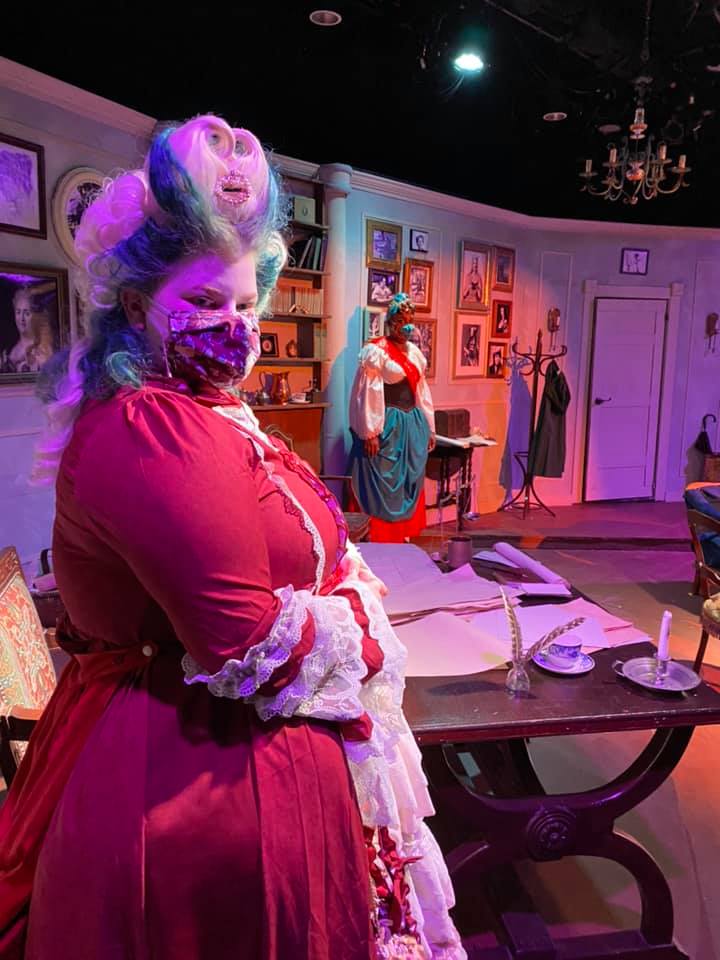
You might assume that we would have paired down the designs as well. It would have made sense to go fully minimal. We had no roll over budget, but were still looking at $7000 in royalties for our season. No, we went bold and brazen. And we started with a full interior French parlour for the first show of the season. It was then I fully embraced the joy of a well stocked scenery inventory.
Our storage consisted of some specialty pieces that we had built or had built for us over the years. Two false prosceniums of different sizes, a set of 13’ tall Periaktoi, a 24’ turntable, a truss system for a full stage rake, four sets of 4x8x8 scaffolding. We used these pieces often and to great effect, but not for every show. Not every show needs a 24’ aluminum bridge with 2 4’ wide steel staircases. The year before however, we had done Something Rotten. It would have travelled to the International Thespian Festival in 2020, had the festival not befallen the fate of all live events that summer. We built for the show a complete set of Hollywood flats to fit into our scaffold units. These flats all fit together and had windows and doors that configured four two story buildings that rolled around the stage. All of those flats and platforms were now neatly carted up in our storage facility.
Without those walls and platforms, in combination with our existing unusual set of stock pieces, I would never have been able to make our 2020-21 season happen. I lacked the budget and the student hands that year to make it happen. We found pieces in absolutely every corner of the storage facility and I have never been afraid to rely on stock scenery again. Our inventory allowed me and a very small student build crew to put together three full sets (the Revolutionists, Pippin, and Once on this Island) and one off site video project that season, allowed us to do it with no incoming revenue, and because we were limited in what we could use, opened a whole new level of creative problem solving for me and my classes.
Taking Inventory: What’s in Your Stock?
I was genuinely blessed with a full inventory and 2000 square feet of storage space to put it in. I know not everyone has this luxury. Even so, it's important to know what you do have available so nothing goes to waste. Knowing where your starting point is will save you time and money.
Keeping an inventory catalog can be as simple or as difficult as you want. We use a google spreadsheet with tabs for each location. “Shop”, “On stage Storage loft”, “Stadium Storage” are each their own tab. Item, number of, size, color, condition are all in the spreadsheet.
There are also theater specific inventory programs. StageStock offers free use up to 100 items and is reasonably priced for up to 500 listing. I worked at a theater that used Sortly, and that worked well, with printable, scannable labels and abundant searching options. It also has a free up to 100 items plan. Whatever works for you, and what you will use, is ultimately the best system for you.
Once you know what you have, you can start building out what you need. Ask yourself:
What have our sets looked like the past few seasons?
What have we borrowed on repeat that we could build and keep instead?
What is our storage capacity and how can we use it best?
We update as part of our end of season clean up. Students are responsible for areas and work in teams. It's important to keep them involved and invested. If they have to keep it inventoried, they will be more likely to actually keep it organized.
Creative Repurposing: From Old to Outstanding
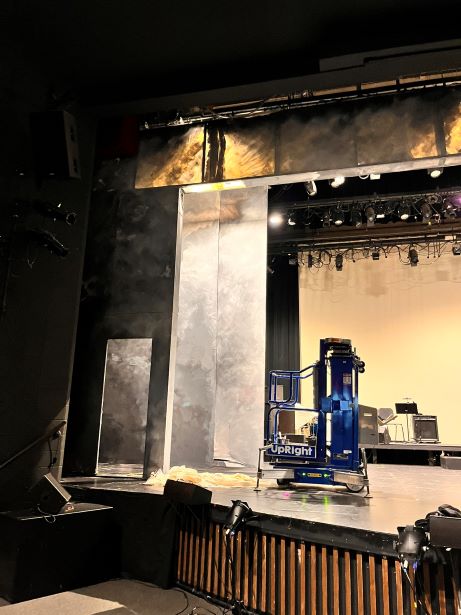
If you aren’t used to working with stock inventory, your first thought might be that you are limited by the shape of what you have. Flat frames can be repainted, sure. But they can also be resurfaced. We’ve done so many variations with our false proscenium! We slatted the whole thing in clap board for Ragtime, we skinned it in muslin and projected on it for SIX, we turned it into a Victorian shadowbox for Mary Poppins, and we added a long slant to create an offset angle for The Scottsboro Boys. We cut second floor doors into it and added stage extensions in front of it for Aladdin. The possibilities for your stock scenery are endless!
Think Outside the (Prop) Box:
Flats: Turn generic flats into new locations with paint, fabric, or projection mapping. We’ve all done that. But you can do even more if you consider reskinning, adding extensions over existing frames, insert doors or add height with small extension pieces. Can you fly it? Can you add a tip Jack? Can you take those flats and turn them into a periaktoi?
Furniture: Repaint, reupholster, or modify chairs/tables to fit different eras or styles. Slip covers and reversible cushions are fabulous for fast scene changes! A square metal stool can become a dining room chair if you bolt a ½” piece of plywood to the back, a piece of foam on the seat, and dress it with a full chair cover.
Props: Combine or alter props for new uses. We’re masters of this already, right? Let your students showcase their creativity by providing them materials and reference sources and see where they can take the project.
Budget-Friendly Upgrades
Paint and Texture:
Use inexpensive paint techniques (sponge painting, stencils, or faux finishes) to refresh scenery. Remember, if you hate it, you can start over!
Add textures like burlap, foam, or fabric for depth. We cut lauan scraps to make bricks, glue and staple into place. Fast dimensional walls!
Lighting and Projection:
Use LED lights or gobos to change the scene without building new sets. This is what we did with our muslin covered proscenium for SIX. We painted it with a stylized pattern in shades of gray, then used LED instruments to change the color completely for each Queen.
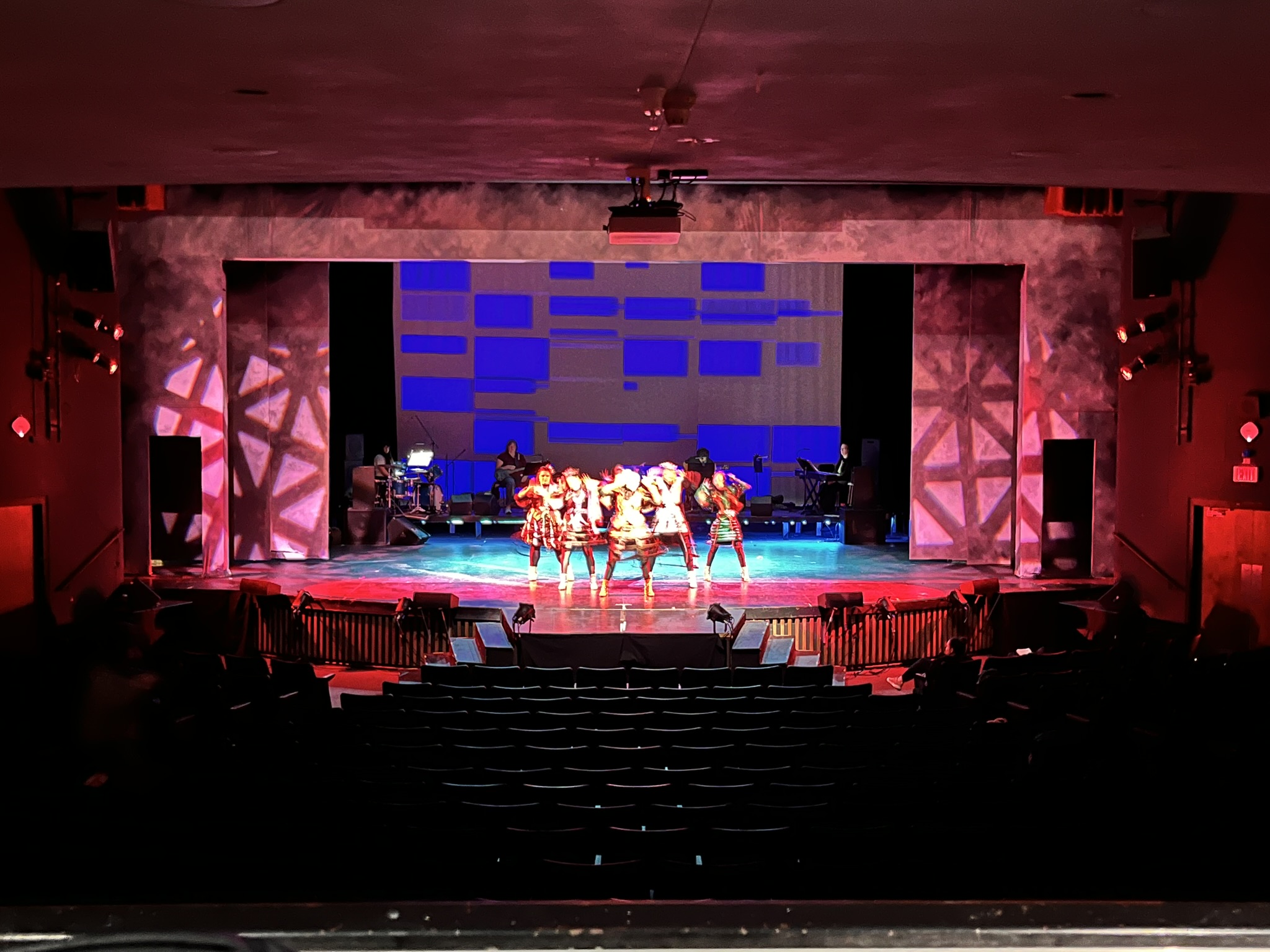
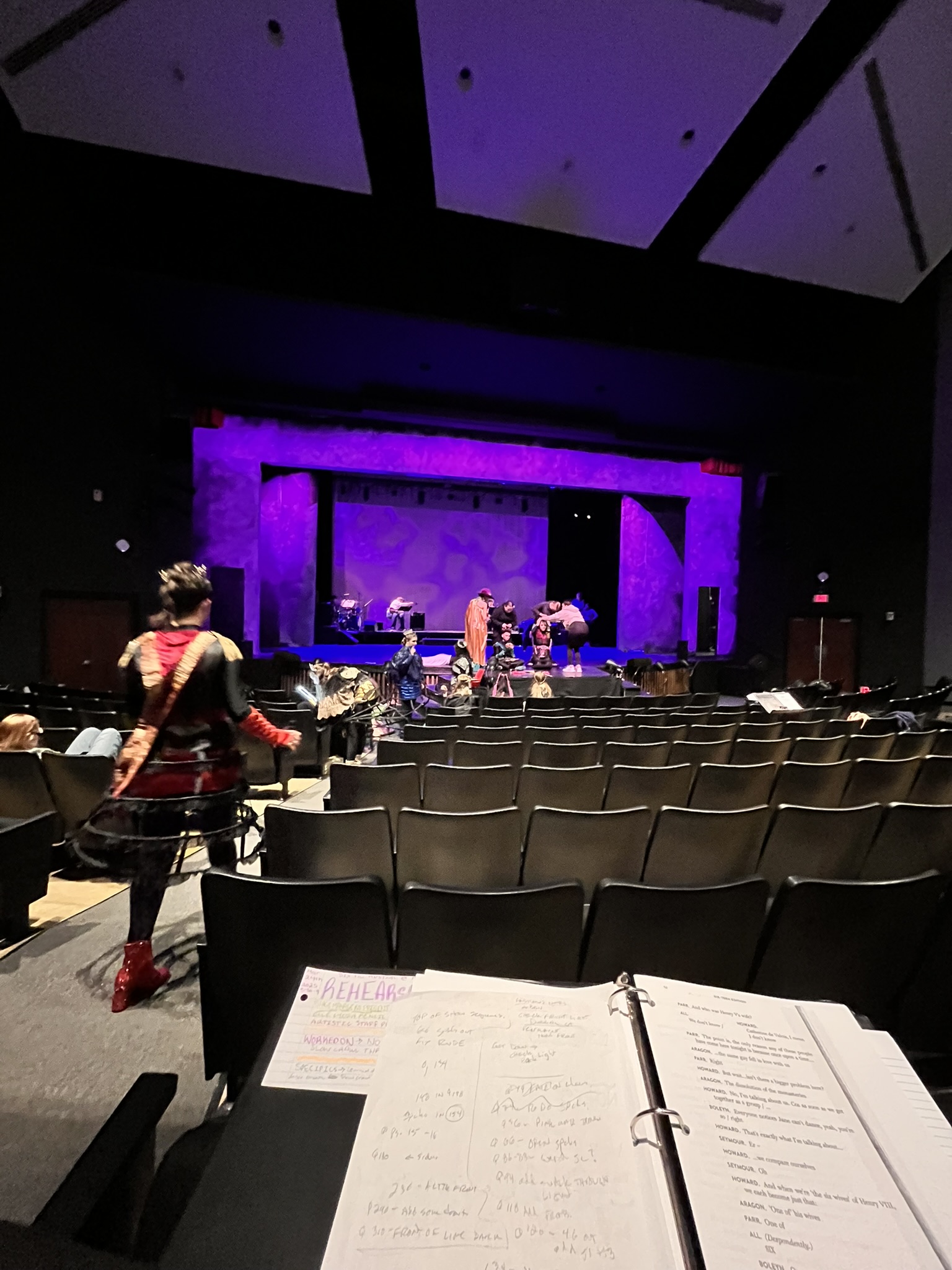
Experiment with projection mapping to turn simple flats into dynamic backdrops or interactive set pieces. Madmapper is inexpensive, but you can get started with Canva at no cost.
Collaborate with Other Departments:
Partner with art classes for new ideas that look at materials in ways you might not have considered. Our art department does giant every-day-object sculptures entirely out of cardboard every year and they are brilliant.
Sustainability in Theater: Why It Matters
We have all been talking about sustainability for the good of the planet for decades. It is sometimes harder to bring that into our everyday life backstage, especially when deadlines are looming. But building and utilizing a solid stock scenery is not only fiscally good for your theater, it's one step toward cutting down on waste and keeping your art environmentally friendly.
Case Study: A Show Transformed by Stock Scenery
Last year, I wanted to expand how I was working with other small theaters and started offering a service, TD in Your Pocket. I sat down with directors and their designers for a day, reviewed their plans and together we looked at their entire inventory, drafted a 3d model, created a list of stock items to pull and mapped out exactly where those pieces would be used on stage. The difference in their process was astounding. It allowed them to focus on creative elements that they never have time for, saved them time on the build and money on materials, and gave them a full stage set that they had never been able to accomplish before. The audience was impressed with their levelled up scenic storytelling. All by starting with the pieces they had hidden in the corners of their space.
Another school I work with found an entire storage area under their stage that, due to high staff turnover, no one actually knew was there. Students cleared it out, found an entire set of platforms, and rearranged the space to fit all of the platforms they had built for the previous show. They will be starting with a real advantage for their next show. The important lesson there is to keep an inventory that can be shared once you move on.
Challenges and Solutions
The biggest hurdle to keeping a good inventory is often storage space. Get creative, and don’t be secretive about it. Communicate with your building admin and custodial staff. Explain the fiscal benefits of having a good inventory. Build or purchase rolling carts that your inventory can live on for easier movement.
Keep the stock well maintained. Check for wear and tear, loose screws or protruding staples. Make it part of your students’ responsibilities. That keeps your inventory safe, your people safe, and shows your admin that you’re serious about what you are creating.
Build your stock a little at a time. Make sure you are adding one or two well built, intentionally designed pieces with each show. That builds your stock without breaking the bank.
Your Turn!
What have you created with your stock scenery? Share your images on the Backstage AIC Facebook group. Lets see your most creative re-creation!
Would you like a VIP-TD in Your Pocket day?
I would love to work with you and your team to bring your ideas to life. If your program doesn't have a technical director or dedicated design team, lets talk about what would make your build dreams a reality. Email [email protected] or Click here for more info.
