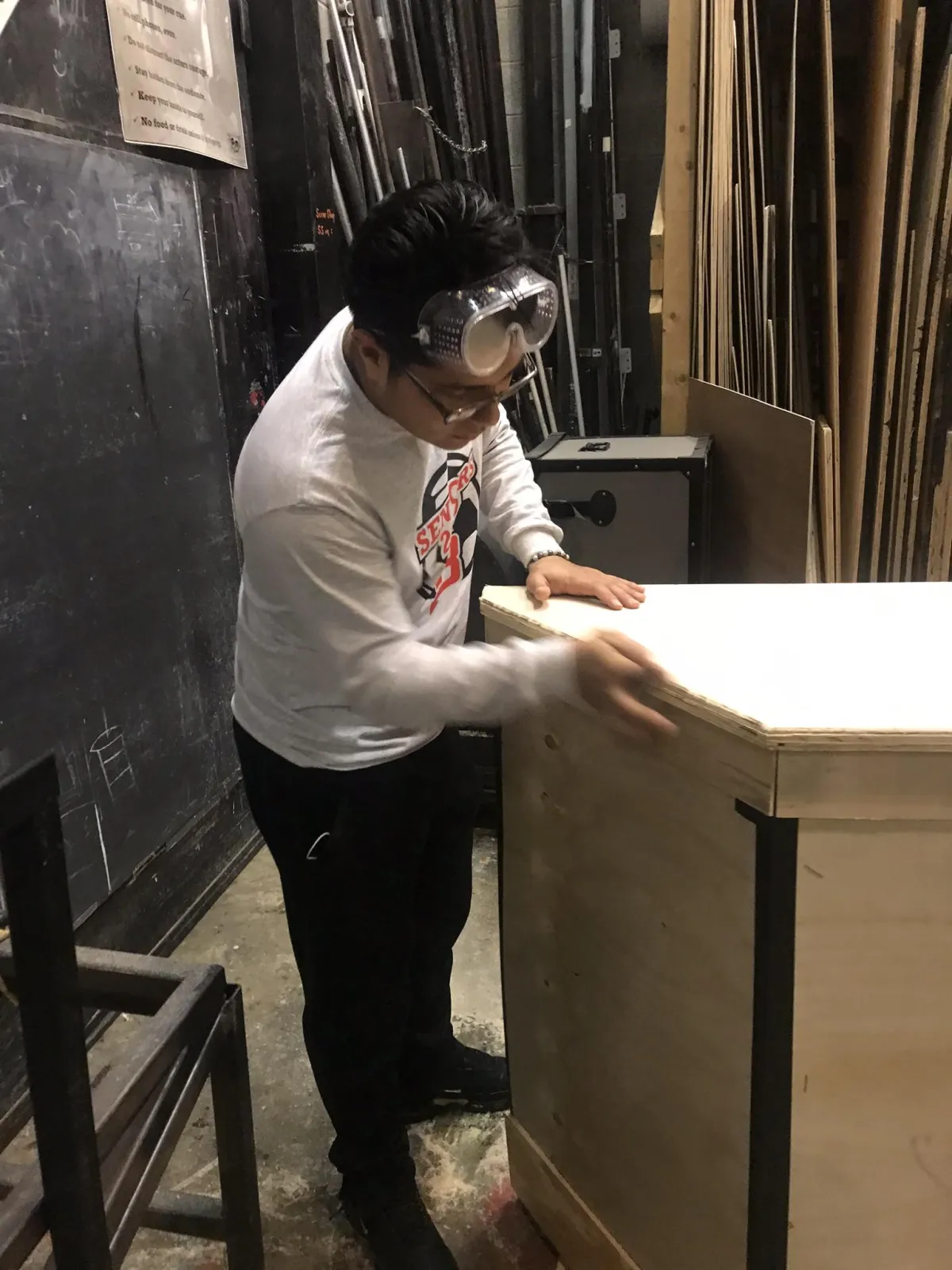
Start the Season with Safety First
In the past, my building admin have asked me to describe my job. Because, let's be real, no one really knows what a Stagecraft Instructor, or a TD, or a Production Manager does unless they actually do the job. Or are at least in the field. So a high school theater seems like chaos from the outside. And that’s what I tell them. I organize chaos.
Because we always have multiple tasks happening at once (builds, hangs, prop construction, costume repairs) many students come in with the belief that we don’t care about rules, systems, or safety. Nothing could be farther from the truth.
Why Safety Matters
We all know safety matters. One of my favorite sayings is, if there’s a sign, its happened at least twice. The same can be said of shop rules. We like to believe everyone has enough common sense not to use a sawblade as a frisbee, but well… It is incredibly important to create a culture of safety with your students so they will value it and recognize it, even if the “outside world” sees chaos.
Of course, the primary reason to start the season with safety is to avoid injury. Tools are replaceable; your eyes, toes, and fingers are not. People don’t realize it, again, that whole outsider thing, but a theater is as complicated a workspace as a wood shop or an auto shop, and just as dangerous as a swimming pool, but they rarely think to have a “lifeguard on duty” when they send kids to get ready for the talent show.
A good safety culture also builds trust. Just like the pool, parents drop their kids off for swim lessons knowing there will be rules and their kids will come home wet and tired, but unharmed. Students, parents, and administration need the reassuring knowledge that students may come home covered in sawdust with paint on their clothes, but they will have learned new skills and all body parts will be accounted for.
Students can accomplish more when they have a clear understanding of the guidelines. There is no guess work on their part. Step 1) grab the goggles, step 2) get the right tool for the job, step 3) use the plans provided, step 4) set. Well, maybe not quite that fluid, but fewer accidents, clear instructions, and confident students means fewer slow downs and less mistakes, which saves you time, money, and paperwork.
The Non-Negotiables
Here are some bare minimum safety rules for you and your space. These will apply anywhere you are building, hanging, or working on your show whether in a full shop, on the stage, or in the parking lot after school.
A. Personal Protective Equipment (PPE)
- Safety glasses: Required for cutting, drilling, or sanding. If there will be detritus in the air, wear them. No, glasses do not count.
- Closed-toe shoes: No sandals or flip-flops. If allowed, steel toed or composite toed footwear.
- Gloves: For handling rough lumber or metal, working with lighting instruments, or really anytime you want to protect your skin. And just like any other tool, the right gloves for the job will make a difference.
- Ear protection: Skip the earbud argument, regardless of the sound blocking technology. Just use earplugs or appropriate and approved ear muffs.
B. Shop Rules
- No horseplay: The shop is a workspace, not a playground. It should be fun, but not “I dare you” fun.
- Inspect tools before use: Check for damage or defects at the top of the season, even if you did it before you left for the summer. Teach the kids how to do so they feel empowered to bring problem tools to your attention. Never make them feel pressured to finish a project with an unsafe tool.
- Keep aisles, sinks, and doorways clear: Tripping hazards are a leading cause of accidents.
- No distractions: Phones away, food away, focus on the task.
C. Tool-Specific Safety
- Power tools: Only for trained students. Always unplug when changing blades/bits.
- Ladders: Always have a spotter. Never stand on the top rung.
- Hand tools: Carry them by your side, not in your pocket. Tie line or paracord those c-wrenches!
Emergency Procedures
First aid kit location: Label it, hang a sign over it, check it regularly and restock.
Fire extinguisher: Make sure they are charged, make sure your students know how to check if they are full, and whenever possible, get your local fire department to come in and teach proper use. I have never met a fire marshal that doesn’t love to come out and educate kids on fire safety. We’re passionate about our work, they are equally passionate about theirs.
Evacuation plan: Post a map with exits clearly marked. Not just fire drills, but all types of emergencies. And talk about what to do when that alarm goes off when students are working in unusual places. We have five workspaces and a catwalk. Don’t assume they will know what to do.
Teaching Safety
Start with a safety contract. Have students and parents sign off on the rules. I send a copy home with students and have them bring it back with their parent's signature as well. That way everyone is informed of the expectations and the "real" nature of what we do in the shop. If you want a copy of ours, send me an email ([email protected]) and I will send you a copy. Safety contracts can get fairly specific to your space, school policies, and local ordinances about who can do what when, so it is important to have your own. With that in mind, I am happy to share ours as a starting point.
Have regular drills. Practice emergency procedures at the start of the year. Talk about it with each show. Make it part of the job, not an add on or a burden. If students get used to “Safe is just what we do here”, then students will start to monitor themselves. There is nothing quite as satisfying as hearing a Junior say to a new freshman, "No, you need goggles, let me get them you."
And most importantly, lead by example. If you skip safety steps, your students will too.
Freebie/Resource
Want some ready-to-use safety lessons and resources for your class? Download the Theater Shop Safety Bundle from the Backstage AIC TpT store here.
USITT and EdTA have loads of resources for theater teachers.
The National Association of High Schools has a whole section JUST for theater! Including a safety certification that takes about two hours and provides students with a certificate of completion at the end.
What to Remember and What to do Next
Safety isn’t just a rule, it’s a habit. Bookmark this post, print the rules for your shop.
Share your #1 rule with us in the Backstage AIC Facebook Group!