Tech Director vs. Production Manager vs. Designer: Why Theater Needs All Three
The Misconception
Whenever I encounter administrators who aren’t familiar with the structure of theater, I find myself explaining the same thing: No, the technical director, production manager, and designer are not the same job.
In educational theater, one person often wears all of these hats. But that doesn’t mean the roles are interchangeable. Clarifying these distinctions helps students, administrators, and even fellow educators understand the depth and specialization required in theater.
And honestly? It’s kind of mind-boggling how much solo theater directors manage, especially when they’re handling all the volunteers, the directing, the build, and the production logistics. That’s a monumental task.
The Technical Director: The Builder
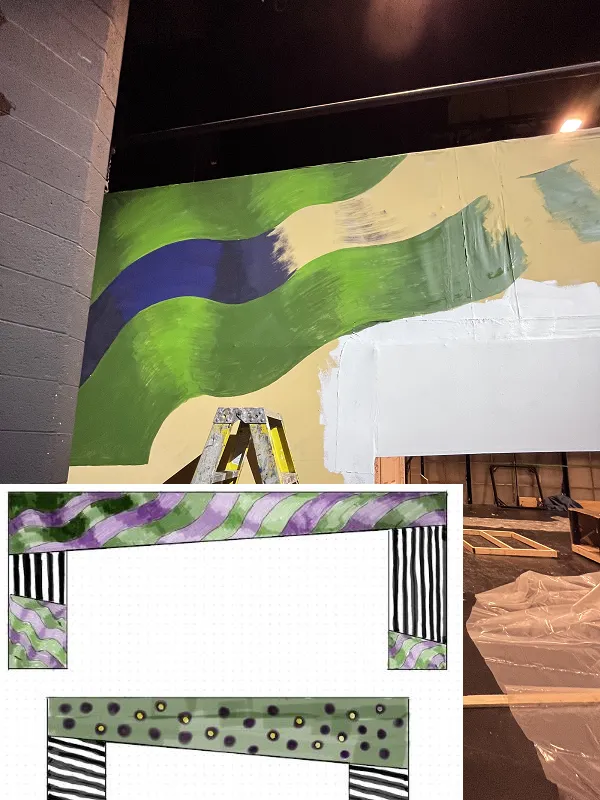
The technical director is responsible for taking the designer’s vision and making it physically happen. Technical Directors translate designs (elevations, renderings) into buildable plans. They decide on materials, techniques, and schedules for construction. It is their responsibility to manage the shop and build process, where will structures be built, when will they be put together, what order will items be loaded on stage. If it sits on the stage, flies in and out, or rolls on and off, the TD is responsible for getting it built.
Where the designer provides renderings and elevations, the TD takes those visual references and creates drafting, shop schedules, material lists. Think of it like this, the designer gives you the "what," and the technical director figures out the "how." It’s like a foreman on a job site. They’re responsible for taking the architect's vision from the blueprint to real life.
The Production Manager: The Coordinator
The production manager oversees all technical elements of the production, not just the set. They oversee all the departments and area heads, master electrician, prop supervisor, costume supervisor, sound, etc., report to them. It is their job to ensure all departments align and meet deadlines. The production manager also handles logistics like hiring, budgets, safety, and inter departmental communication. Broader than the TD’s role, the production manager’s job focuses on the big picture of the production’s technical needs. If the technical director is the foreman on a construction site, the production manager is the general contractor handling not just the carpenters, but the plumbers and electricians as well.. They’re the ones making sure everything comes together on time and on budget.
The Designer: The Visionary
The designer creates the visual and conceptual look of the show. The designer collaborates with the director to interpret the script’s mood, themes, and storytelling. They then produce renderings, elevations, and models (digital or physical). The work happens ahead of the build, designs are finalized 8–10 weeks before the build starts. Design doesn’t happen in the shop. It happens before the shop. The more prep work a designer does, the fewer surprises you’ll have during the build. The designer is the architect, putting function into form before anyone picks up a drill..
Why the Distinction Matters
For Students:
It helps them see theater as a collaborative, specialized field, not just one monolithic job. They might realize, Hey, I love designing but don’t want to build, and that’s okay! They don’t have to do it all.
For Administrators:
It highlights the complexity and workload of theater programs. When someone says, "Why do you need so much time/money/space?" you can point to this breakdown and say, "Because we’re doing the work of 5 different jobs in one."
For Theater Professionals:
It reinforces the value of specialization. Even if one person does it all in a school setting, understanding the distinctions helps us advocate for better resources and support.
The Reality in Education
In schools, one person (often a teacher) does wear all these hats. And let’s be real, it’s a lot. It can lead to burnout, or it can lead to oversimplifying the roles for students.
But here’s the thing: Even if one person does it all, we should still teach the distinctions. Because when our students go out into the world, they’ll understand that theater is a multi-layered beast and that’s a good thing.
Celebrating the Solo Heroes
The fact that so many theater educators manage all these roles while also teaching, directing, and mentoring is nothing short of herculean. So if you’re out there doing it all, give yourself some credit. You’re not just a teacher. You’re an entire division of an industry, all rolled into one.
What do you think? Does this capture the distinctions in a way that makes sense? Share what you would add in the Backstage AIC Facebook Group